
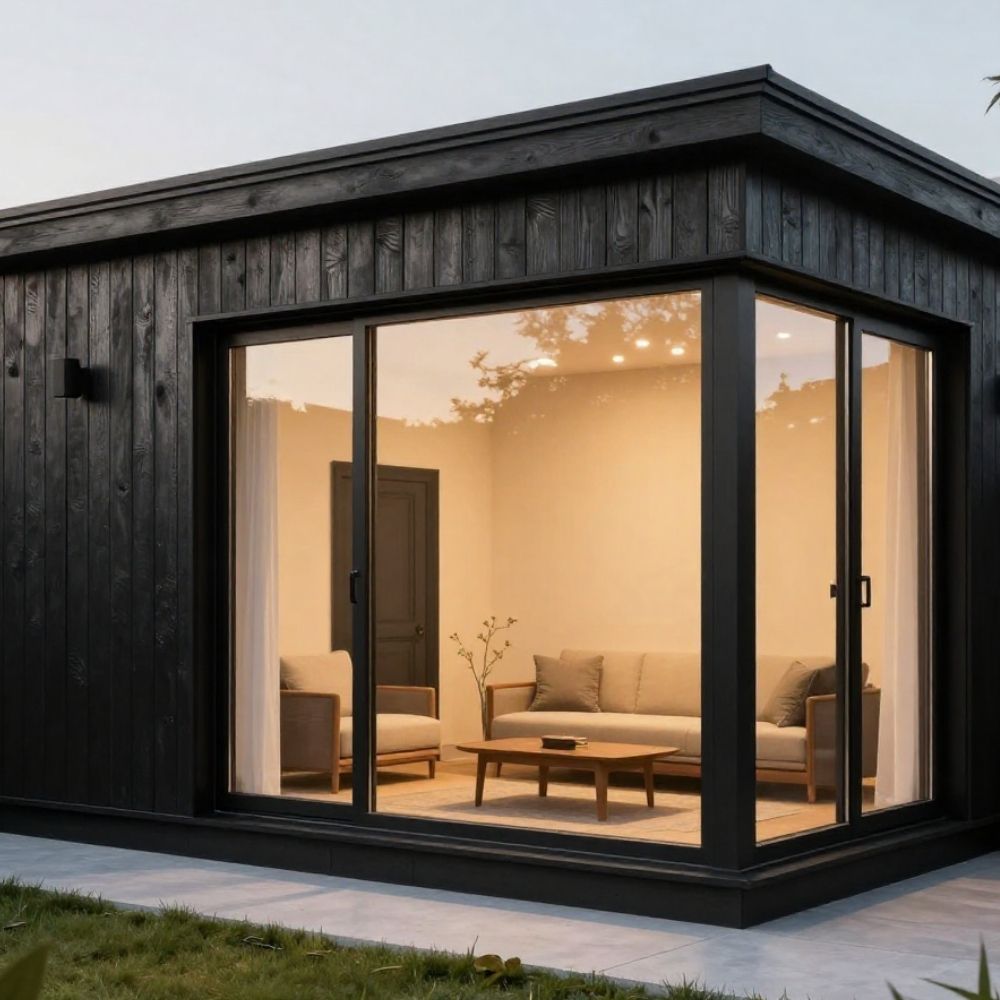
Garden Room Specifications and Costs in Chelmsford
The gap between a garden room that genuinely works and one that disappoints usually comes down to specification. A structure that looks attractive in photographs but has inadequate insulation, poorly chosen cladding or undersized glazing will not hold up well through an Essex winter — and in Chelmsford, where cold north-easterly winds and damp conditions between October and March are a reliable part of the year, that matters more than it might in milder parts of the country.
Chelmsford has a varied housing stock that generates consistent demand for garden rooms. The larger plots found across Writtle, Broomfield, Great Baddow and the older parts of Moulsham lend themselves well to a decent-sized structure. Newer developments on the edges of the city — around Beaulieu Park, north of the A12 and along the Springfield corridor — tend to have smaller rear gardens, which makes getting the specification right even more important given the constraints on floor area.
This post covers what a well-specified garden room in Chelmsford actually consists of, what it costs, and what decisions at the specification stage have the biggest effect on both price and long-term performance.
What Does a Garden Room Cost in Chelmsford?
Before getting into specification detail, it helps to have a sense of where the numbers land. For a properly built, fully insulated garden room in the Chelmsford area:
- Small (up to 12 sqm): £14,500–£22,500
- Medium (12–20 sqm): £22,500–£36,000
- Large (20–30 sqm): £36,000–£55,000+
These are installed prices from a reputable local builder — not online kit estimates. They include foundations, structural frame, insulation, cladding, windows and doors, electrics and a standard internal finish. High-end glazing, bespoke joinery, wet rooms and specialist fit-out are priced on top.
Chelmsford sits broadly in line with the Essex and wider South East market for construction labour — above the Midlands and North, and slightly below Central London and the prime commuter belt. For CM1 to CM3 postcodes and the surrounding area, these figures represent a realistic starting point.
The Frame: Timber or Steel?
The structural frame is the backbone of the building and the first significant specification decision. The large majority of garden rooms are timber-framed — it is cost-effective, well understood by most builders, works well with the range of cladding options available, and performs well thermally when combined with the right insulation. Engineered timber — glulam or LVL beams — is increasingly common on larger or more architecturally ambitious structures where spans are wider or loads are greater.
Steel frames are used less frequently in domestic garden rooms but suit certain designs — particularly those with very large glazed openings or a more industrial aesthetic. Steel is more expensive than timber and requires more specialist fabrication, but it allows for thinner structural elements and greater flexibility in the internal layout.
For most Chelmsford homeowners, a well-specified timber frame is the right choice. It performs well, is straightforward for local builders to work with, and keeps the project cost at a manageable level without compromising on quality.
Insulation: The Specification That Matters Most
More than any other single element, the insulation specification determines whether a garden room is genuinely useful year-round or only comfortable between May and September. This is the area where cheap builds cut corners most aggressively, and where the consequences are most apparent once the building is in use.
A fully insulated garden room intended for year-round use in Chelmsford — as a home office, a studio, a gym or any other regular-use space — should be targeting U-values broadly in line with current Part L building regulations for new dwellings, even though garden rooms below 30 sqm are technically exempt. This means:
- Floor: 0.22 W/m²K or better — typically achieved with 100mm rigid insulation board beneath a chipboard or timber deck
- Walls: 0.18–0.28 W/m²K — 100mm mineral wool or rigid foam within a 140mm stud frame, with a vapour control layer on the warm side
- Roof: 0.15–0.18 W/m²K — a warm flat roof or cold pitched roof with 150mm+ insulation
Achieving these figures costs more than fitting a thinner layer of cheaper insulation, but the difference in usability is significant. A room that requires a small electric radiator to stay comfortable on a cold January morning is a very different proposition to one that needs constant high-output heating just to be tolerable.
Ask any builder quoting your garden room to specify the insulation values they are targeting for floor, walls and roof. If they cannot or will not answer this question clearly, the insulation is probably not a priority in their specification.
Cladding: Appearance, Longevity and Maintenance
The external cladding affects how the building looks, how long it lasts without maintenance, and to some degree how it performs thermally in combination with the wall build-up beneath it. The main options in the Chelmsford market and what each involves:
Treated softwood timber is the most common starting point and is included in base pricing. It is cost-effective and looks good initially, but requires treating or staining every three to five years to maintain its appearance and prevent deterioration. In Chelmsford’s variable climate, untreated or poorly maintained softwood will start to look tired within a few years.
Siberian larch or western red cedar costs more upfront — typically adding £1,500–£3,000 to the build cost depending on size — but weathers to a natural silver-grey that many homeowners prefer, requires significantly less maintenance than treated softwood, and lasts considerably longer. For a building intended as a permanent addition to the garden, the additional cost is generally worth it.
Composite cladding — fibre cement boards or composite timber-effect panels — adds £2,000–£4,500 over a softwood spec but is effectively maintenance-free. It does not rot, warp or need treating, and holds its colour well over time. It is particularly worth considering for gardens with heavy tree cover or shading, where timber cladding is more prone to moisture retention and algae growth.
Brick or rendered block is less common on garden rooms but suits certain settings — particularly where the main house is brick-built and a matching or complementary external finish is preferred. This is a more expensive option and is less typical for standalone garden structures, but it is worth discussing with a builder if visual continuity with the house is a priority.
Glazing and Doors: Where the Budget Goes
The door and window specification is where garden room costs can increase most noticeably, and where the visual impact of the building is largely determined.
Bi-fold or sliding doors are the most popular choice and the most significant single cost item in most garden room builds. A good quality aluminium bi-fold set with double glazing — typically the full rear-facing width of the building — costs £2,500–£5,500 fitted depending on width and number of panels. Triple glazing is available and improves thermal performance, but the cost premium is significant and the marginal gain over good quality double glazing is modest in most domestic settings.
Aluminium windows are the standard choice for garden rooms. They are thermally broken, low maintenance and available in a wide range of RAL colours to suit different cladding and house styles. UPVC is cheaper but tends to look incongruous on a well-specified timber or composite-clad structure.
Rooflights or roof lanterns are a popular addition that significantly improves natural light, particularly in rooms that do not face south or are partially shaded. A single fixed rooflight costs £500–£1,500 fitted. A full roof lantern on a flat-roofed structure is more expensive — typically £2,000–£4,000 depending on size — but creates a genuinely striking interior.
Glazed gable ends suit certain pitched roof designs and can create a striking aesthetic, particularly on larger garden rooms. They are a premium specification and cost accordingly, but for a building being used as a design studio, an art room or a high-end home office, they can transform the feel of the space.
Electrics and Heating
A basic electrical specification — consumer unit, ring main, lighting circuit, a run of double sockets — is included in most builder quotes and is adequate for a standard home office or hobby room. The following additions are worth budgeting for separately if relevant:
- Underfloor heating: £1,500–£3,000 for electric UFH in a standard garden room
- Air source heat pump or split air conditioning unit: £1,500–£3,500 installed — useful both for supplementary heating in winter and cooling in summer, which matters in south-facing rooms during Essex summers
- Data cabling and AV provision: £300–£800 depending on complexity
- External lighting: £400–£1,200 depending on the number of fittings and cable run length
All electrical work must be signed off under Part P of the Building Regulations by a registered electrician, regardless of whether the structure itself required planning permission or building regs approval.
Planning Permission and Building Regulations in Chelmsford
Most garden rooms in Chelmsford fall within permitted development — no planning application is required provided the structure is single-storey, eaves do not exceed 2.5m, the overall height stays within 4m for a pitched roof or 3m for any other roof type, and the building does not cover more than 50% of the garden area.
Chelmsford has several conservation areas — including parts of the city centre and the village of Writtle — where permitted development rights are more restricted. Properties in these areas, or close to listed buildings, may require a planning application even for a modest garden room. It is always worth checking with Chelmsford City Council before work starts if there is any uncertainty.
Building regulations approval is not required for most garden rooms under 30 sqm, provided the structure is single-storey, does not contain sleeping accommodation and is positioned at least 1m from the boundary. The electrical installation requires Part P sign-off in all cases.
Getting the Specification Right from the Start
The decisions made at specification stage — insulation values, cladding choice, glazing specification, electrical scope — have a much greater effect on the long-term performance and satisfaction of a garden room than the headline build cost. A building specified to do the job properly costs more than a basic structure, but it is significantly more useful, more comfortable and more durable over the life of the building.
If you are planning a garden room in Chelmsford, Great Baddow, Writtle, Broomfield, Danbury, Galleywood or anywhere across mid-Essex, we are happy to come out, look at your plot and talk through the specification in detail before any commitment is made. Get in touch to arrange a visit.